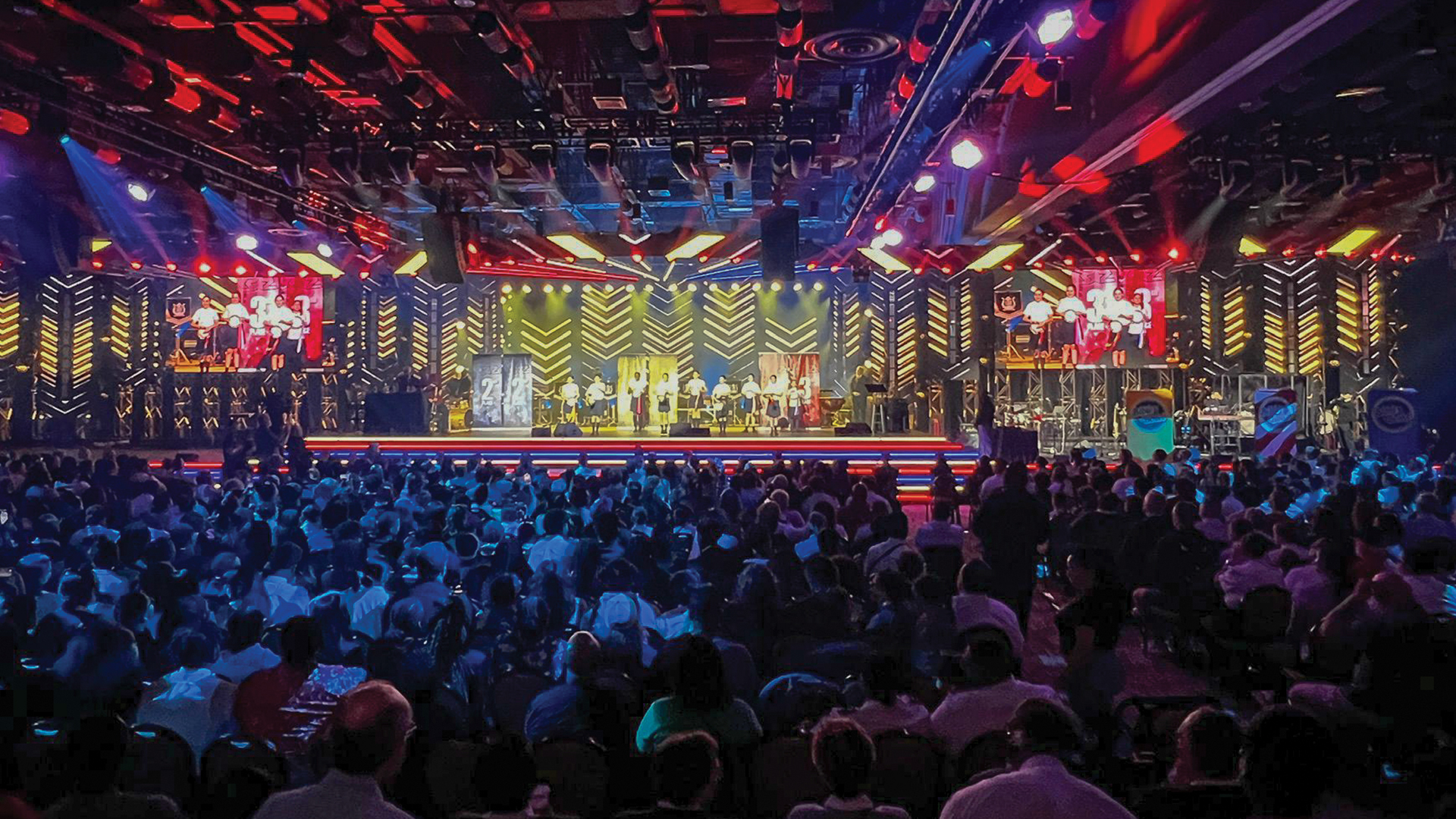
The conference featured six hours of presentations mostly speech followed by an awards dinner with live entertainment. The audio requirements differed dramatically: speech demands intelligibility above all; music requires full-frequency reproduction and emotional impact. Selecting a PA system optimized for speech-heavy events while maintaining capability for musical moments requires understanding how these requirements differ and what equipment serves both adequately.
Speech Reinforcement Priorities
Intelligibility trumps all other considerations for speech reinforcement. Audiences who can’t understand presenters gain nothing from events regardless of other production quality. The Speech Transmission Index (STI) quantifies intelligibility on a 0-1 scale, with values above 0.5 considered acceptable and above 0.75 considered excellent. Achieving good STI requires speakers positioned appropriately, coverage that reaches all audience areas, and frequency response that emphasizes the 1-4kHz range where speech consonants reside.
Directional speakers improve speech intelligibility by reducing room excitation that creates reflections and reverberation. Column array speakers from Bose L1 Pro, JBL CBT, and d&b E8 focus sound toward audiences rather than bouncing it off walls and ceilings. This directional control maintains clarity in reverberant spaces where conventional speakers struggle—particularly valuable for corporate events in challenging acoustic venues like hotel ballrooms and convention centers.
System Selection Considerations
Distributed speaker systems provide excellent speech coverage through multiple smaller speakers rather than fewer large ones. Ceiling speakers, delay fills, and under-balcony speakers ensure consistent levels throughout venues without the volume differential that single-point systems create. Biamp, QSC Q-SYS, and Symetrix DSP platforms manage the delays and level adjustments distributed systems require.
Compact line arrays like d&b Y Series, L-Acoustics KARA, and JBL VTX A8 bridge speech and music requirements effectively. Their directional control serves speech intelligibility while their full-range capability supports musical moments. These systems represent the mainstream choice for corporate events mixing presentation content with entertainment elements—capable of both rather than optimized for either.
Processing for Speech Clarity
Automatic mixing systems using Dan Dugan algorithms or equivalents manage multiple microphones without operator intervention. Panel discussions, Q&A sessions, and multi-presenter formats benefit from automatic gain management that keeps open microphone count minimal—reducing feedback potential and improving clarity. Yamaha QL/CL consoles include Dugan processing; standalone units from Dan Dugan Sound Design integrate with any mixing system.
Feedback suppression and automatic EQ from processors like dbx DriveRack and Shure P300 address acoustic challenges automatically. These tools prove particularly valuable for events in unfamiliar venues where acoustic characteristics aren’t known in advance. While they don’t replace skilled engineering, they provide safety nets that prevent feedback disasters and smooth out room response problems.
Speech-heavy events deserve audio systems selected and configured for their specific demands. The investment in appropriate speakers, processing, and engineering expertise ensures that audiences hear every word clearly—the fundamental requirement that all other production elements support.
