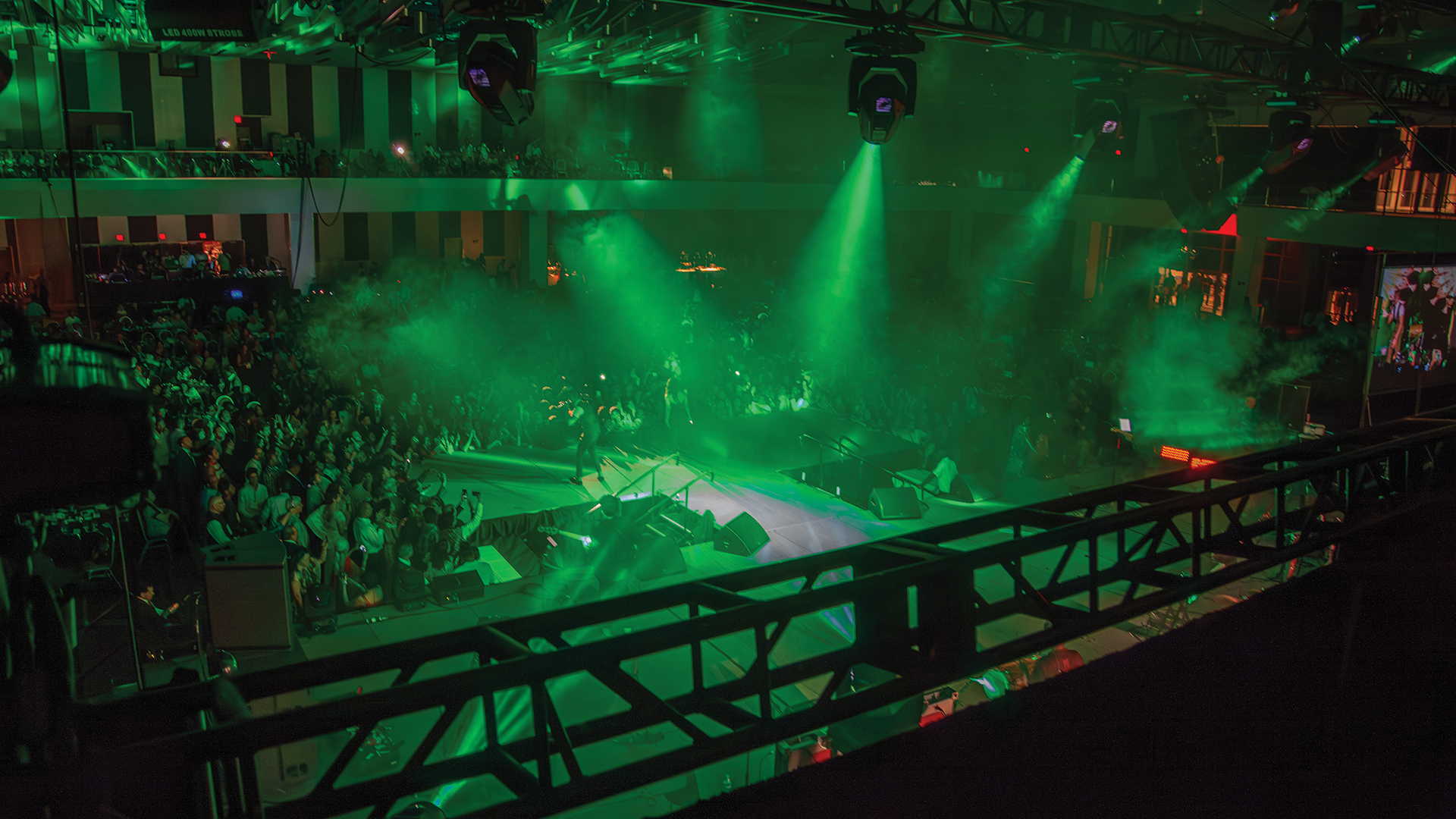
The Battle Between Projected Light and Ambient Contamination
The content looked spectacular in your editing suite deep blacks, vibrant colors, perfect contrast. Then you projected it at the venue and everything appeared washed out, milky, and disappointingly flat. This universal frustration has plagued projection professionals since the technology emerged, and the culprit remains constant: ambient light overwhelming projected imagery.
The physics explaining washed-out projection involve simple addition. A projector outputs light; ambient sources add more light. The screen reflects all incoming light regardless of source. When ambient contribution approaches or exceeds projector contribution, contrast collapses and colors desaturate into gray ranges. The solution requires either increasing projection intensity or decreasing ambient contamination ideally both.
The historical progression from darkened movie palaces to ambient-light-challenged conference rooms paralleled projection technology development. Early arc lamp projectors from companies like Strong International required complete darkness. Modern laser phosphor projectors from Christie, Barco, and Panasonic tolerate some ambient light, but even 30,000-lumen monsters cannot overcome poorly controlled environments.
Understanding Screen Selection Impact
Screen surface selection dramatically affects ambient light performance. Matte white screens the industry default reflect all incoming light equally, including both projector output and ambient contamination. In controlled-light environments, matte white performs beautifully. In ambient-challenged spaces, matte white becomes a washed-out disaster.
Angular reflective screens (sometimes called ALR Ambient Light Rejecting screens) from manufacturers like Screen Innovations, Stewart Filmscreen, and Da-Lite reflect light from controlled angles while absorbing or redirecting light from uncontrolled angles. A projector mounted directly in front of audience sightlines delivers light at angles the screen reflects; overhead house lights deliver light at angles the screen rejects.
Gray screens represent a middle-ground solution, using darker base material to improve perceived contrast at the cost of absolute brightness. A 1.0 gain gray screen typically shows 30-40% better contrast than equivalent white screens in ambient-light conditions, though shadow detail may suffer in darker content areas.
Projector Output Requirements
The lumens race in projection technology responds directly to ambient light challenges. Modern venues increasingly specify 15,000-30,000 lumen projectors for general sessions because ambient light control remains difficult in windowed ballrooms and multi-purpose spaces. The Barco UDX-4K32, Christie Boxer 4K30, and Panasonic PT-RZ31K represent the current high-output category.
Lumen maintenance over projector lifecycle affects long-term color performance. Laser phosphor projectors from Sony, Epson, and NEC maintain 80% of initial brightness beyond 20,000 hours dramatically outperforming lamp-based alternatives that lose 50% within 2,000 hours. Productions investing in laser projection enjoy consistent color performance across multi-year equipment lifecycles.
Contrast ratio specifications often expressed as 2,000:1 or higher indicate native projector capability before ambient light influence. However, real-world ANSI contrast (measured with a checkerboard pattern in actual conditions) provides more meaningful performance prediction. A projector specifying 3,000:1 native contrast may deliver only 200:1 ANSI contrast in ambient-challenged environments.
Lighting Design for Projection-Friendly Environments
Lighting designers and projection specialists must collaborate to prevent mutual sabotage. Stage lighting aimed toward screens directly contaminates projected imagery. The solution barn doors, top hats, and egg crates controlling fixture spill requires communication between disciplines during pre-production.
House lighting control represents the highest-impact intervention for projection quality. Even excellent projectors fail against 100 foot-candles of ambient ballroom illumination. Reducing house lights to 20-30 foot-candles still adequate for note-taking and navigation dramatically improves projection contrast. Productions that cannot dim house lights should budget for the highest-output projectors available.
Window treatments in venues featuring natural light transform projection performance. Blackout curtains completely eliminate daylight contamination; sheer treatments reduce intensity while maintaining some natural light ambiance. For permanent installations, electrochromic glass from View or SageGlass offers automated control responding to sun position and event requirements.
Content Optimization for Challenging Environments
Content color choices significantly affect perceived washout. Colors near the edges of gamut charts saturated reds, blues, and greens survive ambient contamination better than mid-tone colors. Desaturated pastels that look sophisticated on monitors may become indistinguishable mud under projection in ambient conditions.
Black levels in content deserve particular attention. True black pixels emit no light from projectors, meaning ambient light alone illuminates those areas. When ambient light raises black levels substantially, contrast between dark and light content areas collapses. Designs that avoid large black areas using dark grays, blues, or branded colors instead minimize this effect.
Content mastering for projection differs from web or broadcast preparation. The Rec. 709 color space standard for HD content assumes calibrated displays in controlled viewing environments. Productions targeting projection in ambient conditions benefit from boosting saturation 15-20% beyond what looks correct on design monitors.
Real-Time Monitoring and Adjustment
On-site calibration using pattern generators and light meters establishes baseline projector performance in actual venue conditions. Playing calibration patterns including color bars, gray ramps, and contrast test images reveals washout issues before content rolls, enabling correction through projector settings or environmental adjustment.
Projector picture modes offer real-time color adjustment capabilities. Most professional projectors from Epson, Christie, and Panasonic include preset modes for different ambient conditions, plus custom color profiles saving specific adjustments for recurring venues. The gamma curve adjustment proves particularly effective for ambient-challenged environments—boosting mid-tones while accepting somewhat crushed blacks.
Video processing through media servers like Disguise or Resolume Arena enables content-level correction. Real-time color grading and contrast adjustment applies venue-specific compensation to content without altering source files useful for touring productions encountering different environments nightly.
Structural Solutions for Chronic Environments
Projection booths and throw enclosures enable rear-projection solutions that eliminate audience-area ambient light from screen contamination. The booth—positioned behind a translucent screen from Stewart or Draper—contains all projection equipment in a darkened environment, with only intentional projected light reaching the screen surface.
Screen masking using velour drape or scenic flats surrounding projection surfaces absorbs ambient light that would otherwise scatter off walls and onto screen edges. The theatrical tradition of black masking around movie screens exists precisely because those surfaces absorb rather than reflect contaminating light.
LED walls represent the ultimate ambient-light solution because they emit rather than reflect light. When projection cannot overcome venue ambient conditions despite all interventions, specifying LED alternatives from ROE Visual, Absen, or Samsung eliminates the reflected-light physics that cause washout entirely.
Decision Framework for Challenging Venues
Site assessment should quantify ambient light conditions using light meters before specifying projection equipment. Venues measuring above 75 foot-candles ambient illumination on screen surfaces require either extreme intervention or alternative display technologies.
Budget allocation for projection in challenging environments should favor output over features. A 25,000-lumen single-chip DLP typically outperforms a 12,000-lumen 4K laser in washed-out conditions because raw brightness overcomes ambient contamination more effectively than resolution enhances image quality.
When your production faces the washed-out projection challenge, approach the problem systematically: quantify ambient conditions, select appropriate screen technology, specify adequate projector output, control lighting spill, optimize content, and implement monitoring enabling real-time adjustment. The physics remain unforgiving, but methodical intervention transforms disappointing gray rectangles into vivid projected imagery.
