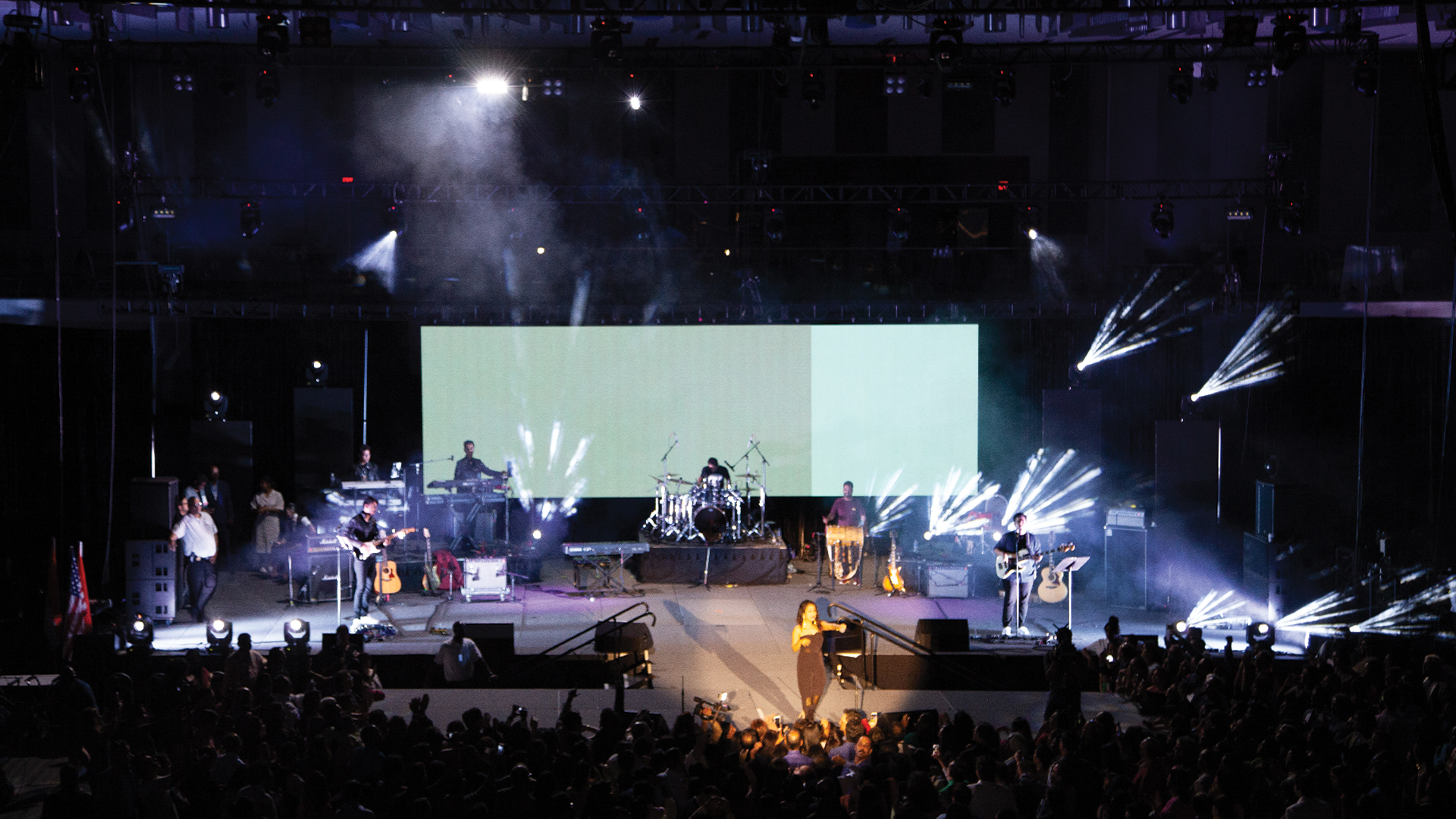
The monitor world — the audio mixing position at stage level, facing the stage, managing the mixes that performers hear through wedge monitors and in-ear systems — is one of the most demanding and least publicly appreciated positions in live sound engineering. While the front-of-house engineer takes the visible creative credit, shaping the sound the audience hears, the monitor engineer is managing a parallel, equally complex mixing operation that directly affects performer confidence, timing, pitch accuracy, and physical safety. The argument for dedicated monitor staff — engineers specifically assigned to monitor world rather than sharing responsibilities with other positions — is both technical and operational.
The History of Monitor Engineering as a Specialty
In the earliest days of rock touring — the late 1950s and early 1960s — performer monitoring was a primitive afterthought. Wedge monitors as a distinct product category didn’t exist; performers often used small speaker cabinets pointed vaguely toward the stage, fed from an auxiliary send on the main console. The RMS HME wedge and similar early products that developed through the 1960s were driven from the front-of-house console’s auxiliary sends, managed by the FOH engineer in between managing the main mix — an impossible cognitive task at high complexity levels.
The recognition that monitor mixing required its own dedicated console, position, and engineer developed through the early 1970s as touring production complexity increased. Clair Brothers Audio — the Pennsylvania-based sound company that became one of the most influential in touring history — is widely credited with standardizing the dedicated monitor engineering position and console in their touring packages through the mid-1970s. Acts like America, The Eagles, and Elton John were among the first major touring acts to employ dedicated monitor engineers as standard tour crew.
What a Monitor Engineer Actually Does
The monitor engineer manages, at minimum, one mix per performer and often multiple mixes per performer (wedges and IEMs, side fills, drum fill). On a tour with eight performers, the monitor engineer may be managing twenty or more discrete mixes simultaneously, each requiring independent EQ, compression, reverb, and level management tailored to the preferences of a specific artist.
Beyond the mixing itself, the monitor engineer is the primary technical interface with the performers during the show. A guitarist who signals a thumbs-down is communicating something about their monitor mix — the monitor engineer reads the gesture, makes an adjustment, and verifies with a follow-up look. This nonverbal performance communication requires being completely attentive to the stage at all times, a level of focus incompatible with managing any other concurrent responsibility. This is the operational core of the argument for dedicated staff: the job demands 100% of one person’s attention, 100% of the time the band is playing.
Console Technology at Monitor World
Modern monitor engineering is done on dedicated digital mixing consoles specifically configured for stage monitoring workflows. DiGiCo SD10-T, Yamaha CL5, Avid Profile, and SSL Live L550 are all commonly specified monitor consoles. The T suffix on the DiGiCo SD10-T (T for Theatre) indicates a configuration with additional Waves processing integration that many monitor engineers prefer for artist-friendly processing options.
The monitor console’s I/O configuration differs significantly from an FOH console. Inputs are similar — all channel sources appear at both positions via console pairing or shared stage box configurations. But outputs are numerous and specifically routed: matrix outputs for individual mix sends, direct outs for IEM transmitters, aux sends for side fills, and often a dedicated effects chain per performer mix (some artists want their effects integrated into the monitor mix; others want a dry monitor regardless of what FOH is processing).
In-Ear Monitor Management Demands
The proliferation of in-ear monitor systems across touring production since the mid-1990s significantly increased the complexity of monitor world operations. IEMs — pioneered commercially by Ultimate Ears and popularized by artists including Garth Brooks, Mariah Carey, and ultimately nearly every major touring act — deliver a mix of extraordinary clarity and isolation directly to the performer’s ear canals. The monitoring advantages are significant: elimination of feedback risk, reduction of stage volume, consistent mix quality regardless of stage position.
But IEMs increase monitor engineer complexity in critical ways. Each IEM user has a personal custom-fitted earpiece (from companies like Sensaphonics, ACS Custom, or Jerry Harvey Audio) with a specific acoustic profile. The mix for an IEM user sounds different than the same mix through a wedge — it requires careful bass management (IEMs in sealed ears can create a resonant bass buildup known as the occlusion effect), ambience restoration (some engineers add a small ambient microphone feed to prevent IEM users from feeling isolated from the room), and compression management to protect against loud transients directly at the eardrum.
Hearing Protection and Monitor Engineering
One of the most important but least discussed responsibilities of a monitor engineer is hearing protection management for performers. NIOSH and WHO standards for safe sound exposure levels are well established, and IEM systems — by delivering controlled, isolated sound directly to the ear — are potentially the most precise tool for managing performer hearing health if used correctly, or one of the most damaging if used carelessly.
Monitor engineers who work with professional artists build an understanding of each performer’s mix preferences that includes level management — ensuring that mixes are not driven to levels that exceed safe exposure thresholds during a show. Sensaphonics ProPhile-8 and similar intelligent IEM systems include real-time dose monitoring that tracks cumulative sound exposure across a performance, alerting when exposure approaches safe thresholds. These tools are increasingly standard on tours with artists who have experienced noise-induced hearing loss and are managing long-term hearing health as a professional priority.
The Case for Two Monitor Engineers on Large Productions
On large touring productions with twelve or more performers and complex IEM requirements, a single monitor engineer — even a highly skilled one — may be at the operational limit of what one person can effectively manage. The emerging standard for major touring productions is two dedicated monitor engineers: a primary monitor engineer and an assistant monitor engineer who manages specific sub-groups of performers (typically the rhythm section), handles IEM system maintenance and RF management, and provides a second set of eyes on the stage to catch performer signals that the primary might miss in a high-demand moment.
