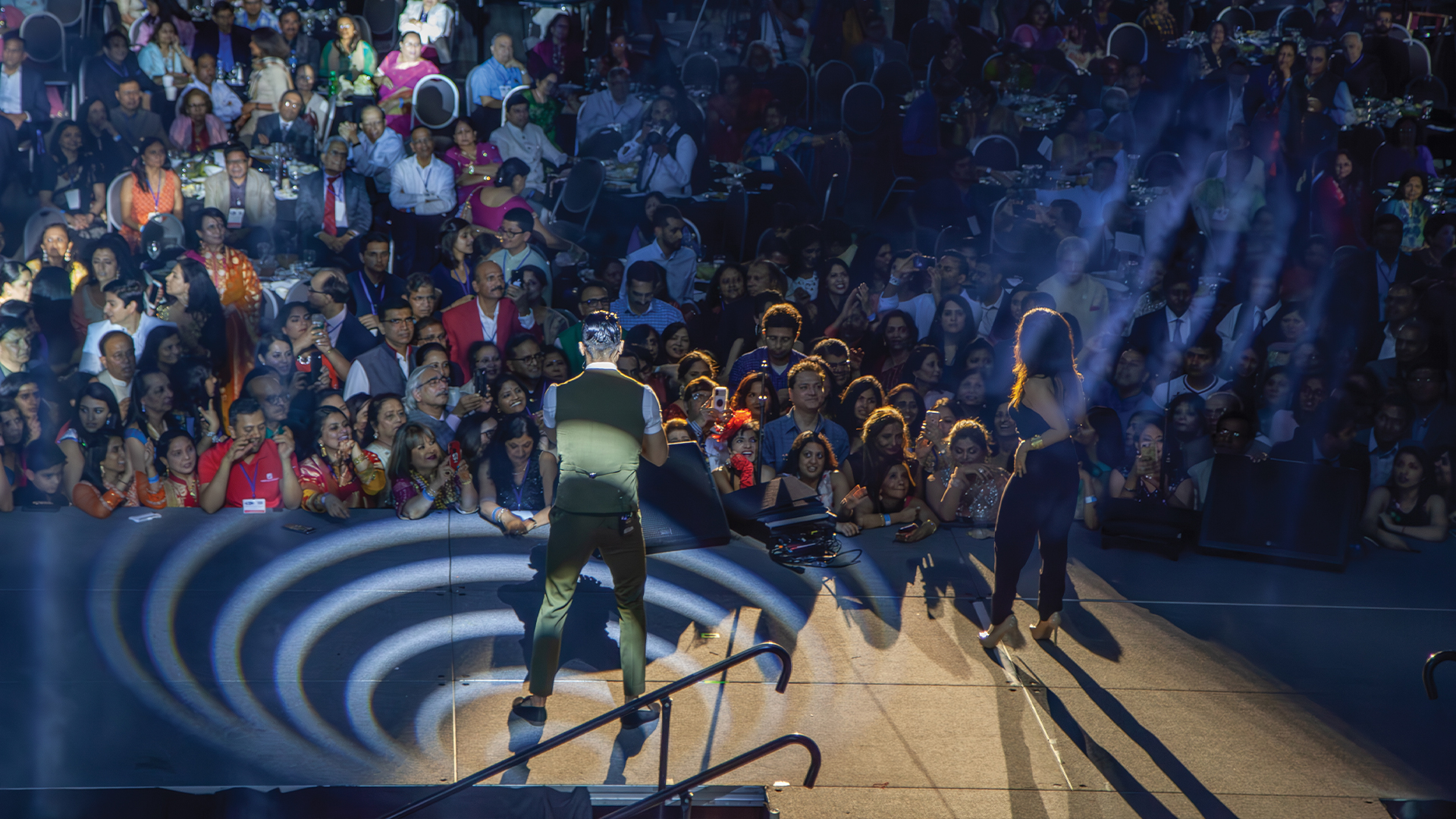
The physics of sound are uncompromising: acoustic wave propagation travels at approximately 1,125 feet per second (343 m/s) at 20°C. That is fast enough to be imperceptible across a small room, but across a 200-foot festival stage, sound from the downstage PA reaches a musician standing at the upstage drum riser approximately 180 milliseconds after it leaves the speaker — nearly a fifth of a second. Add digital audio conversion latency, DSP processing time, and network transport delay to that acoustic offset, and managing signal latency across large stages becomes one of the most technically demanding challenges in modern live sound.
The Origins of Digital Latency Awareness
Latency in audio systems was an analog problem long before it was a digital one — magnetic tape recording introduced tape head offset latency that required physical adjustment of head position for synchronization. But digital audio introduced latency in a new form: the time required to sample analog signals, process them through algorithms, and convert back to analog. Early digital consoles in the late 1980s — including the Neve NECAM 96 — carried conversion latencies that were audible enough to require compensation in monitor systems.
As digital audio networking became standard in touring production — first via CobraNet in the 1990s, then Dante developed by Audinate in the 2000s, and the competing MADI (Multichannel Audio Digital Interface) from AES — additional transport latency was introduced. The challenge of summing these latencies across complex systems and compensating them correctly became a specialized engineering discipline.
Identifying and Measuring Latency Sources
Before compensating for latency, an engineer must accurately measure it. The primary tools for this are acoustic measurement software platforms: Rational Acoustics Smaart, Meyer Sound Galileo GALAXY‘s onboard analysis, or XTA Audio Architect. Smaart’s Transfer Function module can measure the total system delay from any input point to any output point, including the acoustic time of flight from speaker to measurement microphone, allowing the engineer to see exactly how much total latency exists in the complete signal chain.
The latency budget in a modern large-scale production system typically includes: ADC conversion delay (typically 1–2 ms for high-quality converters), DSP processing delay in consoles and processors (varies from 0.7 ms in Yamaha RIVAGE PM10 to 4+ ms in some older processing chains), Dante network transport delay (typically 1 ms in standard configuration, reducible to 250 μs in low-latency mode), and acoustic time of flight from speaker to listener or performer (the dominant component on large stages).
Stage Monitor and In-Ear Monitor Latency
For performers, the most disruptive latency is in their monitor mix — the sound they hear while performing. Human perception research consistently shows that audio delays above approximately 25–30 milliseconds in a monitor mix cause audible double-image effects that disrupt timing and pitch. This threshold is easy to exceed in poorly configured digital monitor systems.
Modern in-ear monitor systems have dramatically reduced this problem by eliminating the acoustic time of flight component — an IEM delivers audio directly to the ear canal, removing the speaker-to-ear distance latency. But the electronic latency in the monitor chain — console processing, network transport, IEM transmitter, and receiver — still accumulates. Systems like the Sennheiser Digital 9000 and Wisycom MCR54 receivers have been engineered specifically for minimum latency, with total system delays under 1.9 ms in their lowest-latency configurations.
Delay Speaker Alignment
On large outdoor stages, delay speaker towers — additional PA stacks placed at distances of 100–200 feet from the main stage to serve audience members at the back of the field — must be time-aligned to the main PA so that the acoustic arrival of both sources at the listener position is synchronized. Without alignment, listeners between the main PA and the delay tower hear a double image that degrades intelligibility and destroys low-frequency impact.
Time alignment is accomplished by introducing digital delay to the delay speaker signal equal to the acoustic time of flight difference between the main PA and the delay speaker. A delay tower at 150 feet from the main PA needs approximately 133 ms of added delay to synchronize with the acoustic wavefront from the main speakers. This is performed with dedicated speaker management processors like the Lake LM 44, BSS Soundweb London, or the onboard delay in d&b audiotechnik R1 software paired with D80 amplifiers.
Video Latency and Lip Sync
Latency management on large stages is not purely an audio problem. Video processing latency — the delay introduced by video cameras, capture cards, switchers, and displays — can cause visible lip sync errors on IMAG screens when audio and video are not aligned. Standard IMAG workflows using cameras with SDI output, a video router, and a projection system can accumulate 3–5 frames (approximately 100–165 ms at 30fps) of latency from camera to screen.
Correcting lip sync in a video production requires measuring the total video latency using a lip sync test signal (the Leader LT4610 and Lynx Technik yellobrik series are used for this) and then introducing equivalent audio delay to the program audio feed to the audience speaker system. The correct lip sync target is approximately 0 to –125 ms (audio slightly ahead) for viewing distances typical of IMAG screens in arena or festival contexts.
Latency in Broadcast Integration
When a live event is simultaneously broadcast, latency management complexity multiplies. The broadcast feed — typically a contribution encoder feeding a satellite uplink or fiber path to the broadcast facility — introduces additional encoding/decoding latency that can range from 100 ms to several seconds depending on the codec and compression level. Managing the relationship between the live acoustic sound in the venue, the IMAG video/audio, and the broadcast feed requires explicit latency management at every point in the chain, with frame synchronizers and audio delay units at the broadcast handoff point to align all paths.
